
The Mai Tai is one of the most ordered and most misunderstood cocktails in the tiki canon. Order one at a chain restaurant and you’ll likely get something bright orange, aggressively sweet, and loaded with pineapple juice. Make one properly, and you’ll understand why it’s been considered the defining tiki drink for over 80 years.
The original Mai Tai has no pineapple juice. No orange juice. No grenadine. It’s a short, spirit-forward drink built around the quality of the rum, and it’s considerably more nuanced than its reputation suggests.

The Story Behind the Drink
The Mai Tai’s origin is one of tiki’s most debated questions, with two names at the center of it: Victor Bergeron, better known as Trader Vic, and Donn Beach of Don the Beachcomber fame.
Trader Vic’s version of events is the one that stuck. In 1944, Bergeron was running his restaurant in Oakland, California when he built a new cocktail around a bottle of 17-year-old J. Wray & Nephew rum from Jamaica. He combined it with fresh lime juice, orange curaçao, orgeat syrup, and a small measure of rock candy syrup, shook it over shaved ice, and served it to two friends visiting from Tahiti. One of them, Carrie Guild, reportedly took a sip and said “Mai Tai, roa ae,” which translates roughly from Tahitian as “out of this world, the best.” Bergeron took the first part of that phrase and named the drink.
Donn Beach, who had already done more than anyone to establish tiki culture in America, disputed the story and claimed the Mai Tai concept was his. The feud lasted for years. In 1970, a legal settlement awarded Trader Vic exclusive rights to the name. Beach’s Don the Beachcomber closed its last location in 2018. Trader Vic’s is still open.
The drink’s journey from Oakland to icon is also worth understanding. In the late 1950s, Trader Vic was hired to design cocktail menus for the Royal Hawaiian and other hotels in Hawaii, where the Mai Tai became the cocktail tourists expected. To keep up with volume and appeal to a broader audience, bartenders began adding pineapple juice, orange juice, and grenadine. The drink got sweeter, simpler, and more colorful. That Hawaii hotel version eventually became what most people think of as a Mai Tai, even though it’s quite different from what Bergeron originally made.
The Original Trader Vic Recipe
The 1944 recipe is straightforward by tiki standards. What makes it exceptional is the quality of the ingredients, particularly the rum and the orgeat.
Serves 1
- 2 oz aged Jamaican rum (see note below)
- 3/4 oz fresh lime juice
- 1/2 oz orange curaçao
- 1/4 oz orgeat syrup
- 1/4 oz rock candy syrup (or simple syrup)
To make it: Combine all ingredients in a shaker with cracked or crushed ice. Shake well and pour unstrained into a double rocks glass or tiki mug. Garnish with the spent lime shell, a sprig of fresh mint, and a fruit pick if you have one.
The original presentation had the spent lime half floating on top of the drink alongside a mint sprig, meant to suggest a small island. It’s a small detail, but it’s the kind of thing that makes the drink look finished rather than thrown together.

The Rum Question
Trader Vic built the original Mai Tai around a 17-year-old J. Wray & Nephew rum that no longer exists in that form. As the cocktail became popular, that specific rum became scarce and Bergeron had to reformulate. His solution was to blend rums: typically a combination of Jamaican rum for funk and body, and a second rum for additional complexity.
That blended approach is what most serious bartenders follow today. A good starting point is 1 oz of a rich Jamaican rum like Appleton Estate 12-year or Smith & Cross, combined with 1 oz of an aged agricole rum like Rhum Clément VSOP or a Barbadian rum like Mount Gay XO. The combination gives you the depth and slight funk of Jamaican rum alongside a cleaner, more refined character from the second.
The shortcut answer is to use a single quality aged Jamaican rum at the full 2 oz. You’ll get a simpler but still excellent drink. What you should not do is use a generic white rum or a flavored rum. The Mai Tai has nowhere to hide poor ingredients.
The Orgeat Question
Orgeat (pronounced “or-zha”) is a French almond syrup made with almonds, sugar, and orange blossom water. It’s the ingredient most responsible for the Mai Tai’s distinctive nutty, floral sweetness, and it’s also the ingredient most likely to ruin the drink if you buy the wrong bottle.
The cheapest orgeat brands use artificial almond flavoring rather than real almonds. The result is a syrup that tastes like marzipan candy: sweet and synthetic. It overwhelms the rum rather than complementing it, and a Mai Tai made with it tastes flat regardless of how good the rum is.
The brands worth using are those made with real almonds: Liber & Co. (our favorite!), Small Hand Foods, and Liquid Alchemist are all well-regarded. They cost more than the supermarket versions, but orgeat is used in small quantities, and a good bottle lasts a long time. It’s one of those places in cocktail-making where the ingredient quality directly determines the outcome.
The Modern Version (For a Crowd)
If you’re serving Mai Tais at an event and want something that’s easier to love across a wide range of guests, a modest addition of orange juice and a small float of dark rum gets you closer to the Hawaii hotel style without losing the drink’s character entirely.
Modern Mai Tai
- 1.5 oz aged Jamaican rum
- 0.5 oz dark rum (for float)
- 3/4 oz fresh lime juice
- 1/2 oz orange curaçao
- 1/2 oz orgeat
- 1 oz fresh orange juice
Shake everything except the dark rum with ice. Strain into a glass over fresh ice. Float the dark rum on top by pouring it slowly over the back of a spoon. Garnish with mint, an orange slice, and a cherry.
This version is more approachable and still meaningfully better than most Mai Tais people have encountered. The float of dark rum on top gives it a visual layer and delivers a richer first impression on the nose.
Batching for Events
The Mai Tai batches cleanly because most of its components are shelf-stable once combined, with citrus being the only time-sensitive element.
For 10 servings of the classic version, combine 20 oz aged Jamaican rum, 7.5 oz fresh lime juice, 5 oz orange curaçao, 2.5 oz orgeat, and 2.5 oz simple syrup. Keep refrigerated and shake individual servings over cracked ice as guests order. Squeeze lime juice the day of service.
For the modern version at the same scale, add 10 oz fresh orange juice to the batch and reduce the lime juice slightly to 5 oz. Prepare individual dark rum floats at service.
Both versions hold well in the fridge for up to 24 hours once the citrus is added.
Why It Works for Events
The Mai Tai sits at an interesting point on the tiki spectrum. It’s strong enough to have real presence, but not so assertive that it puts off guests who aren’t habitual rum drinkers. The orgeat gives it a sweetness and texture that makes it approachable, while the lime keeps it from becoming cloying.
It also has strong visual appeal without requiring elaborate garnish work. The mint sprig, spent lime shell, and a well-chosen stirrer or pick give it a finished, intentional look in seconds. For a tropical-themed wedding, summer party, or any event where the drink menu is part of the atmosphere, it photographs better than most cocktails.
If you’re building a tiki-themed signature drink menu, the Mai Tai pairs naturally with the Painkiller (creamier and more casual), the Cobra’s Fang (more citrus-forward and complex), or the Zombie (stronger and more dramatic). Together they cover a range of profiles without the menu feeling scattered.


Presentation
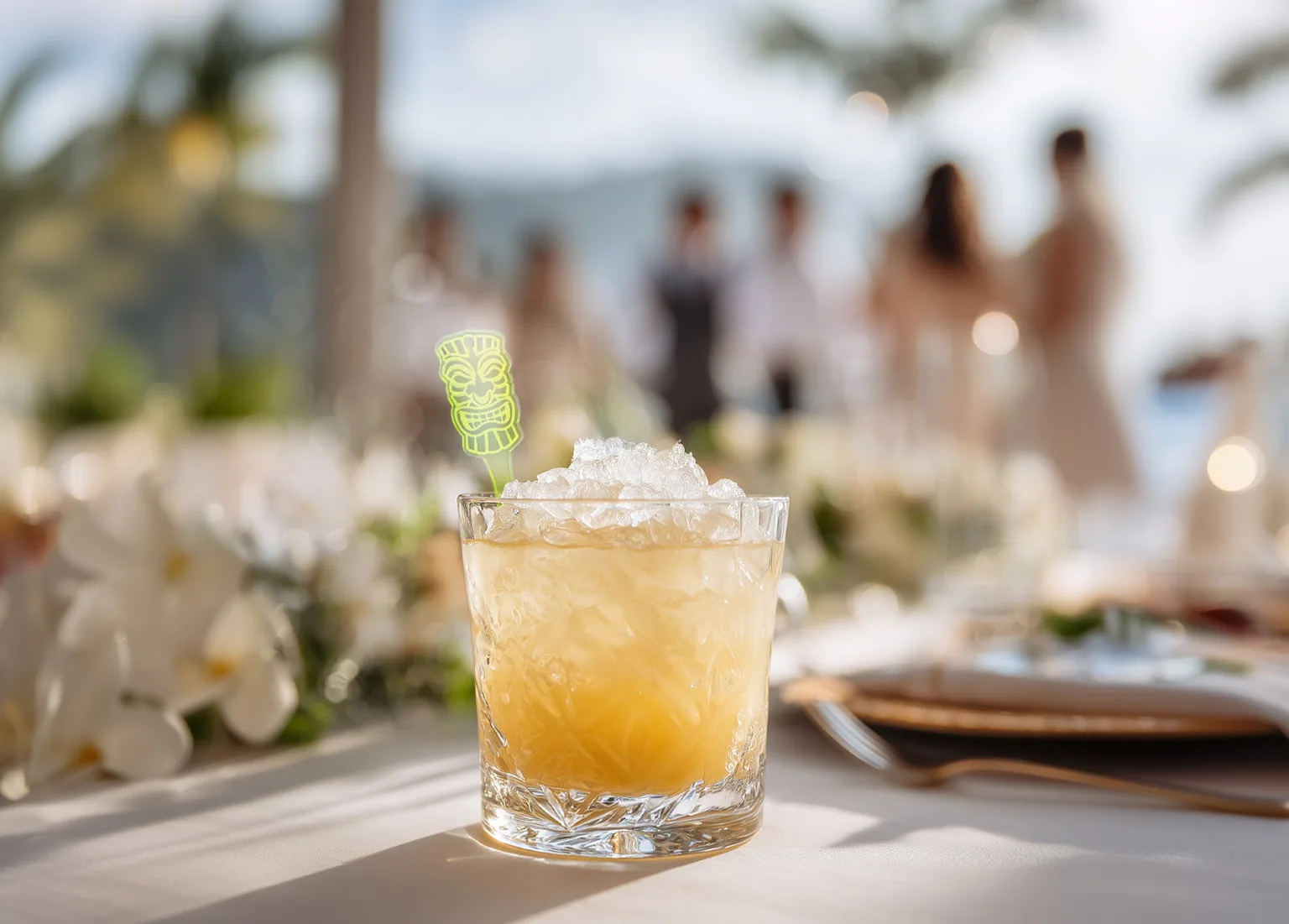
The traditional Mai Tai is served in a double rocks glass or tiki mug with cracked or crushed ice. The spent lime shell on top is a small but worth-keeping detail: it’s part of what makes the drink look like a Mai Tai rather than a generic rum cocktail.
Mint is the essential garnish. It should be fresh and slapped gently between your palms before placing it in the drink, which releases the aroma and gives the glass a herbal scent on the first approach. A fruit pick or cocktail stirrer adds vertical structure and makes the drink easier to photograph well.
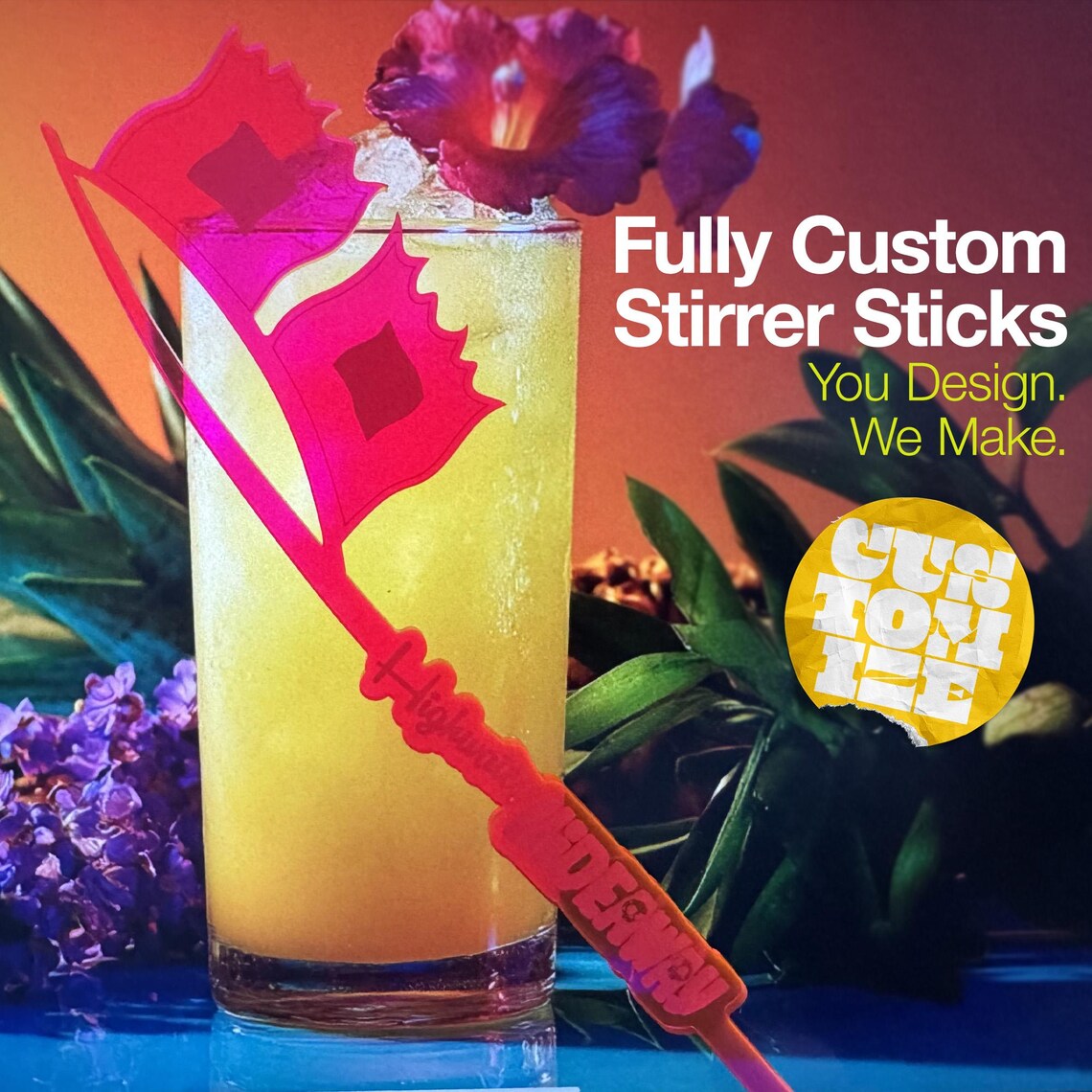
For weddings and events where presentation is part of the design, custom cocktail stirrers with initials, a date, or a logo complete the look and tie the drink to the occasion. It’s the difference between a drink that could belong to any event and one that clearly belongs to yours.
Tips for Getting It Right
Use fresh lime juice. Bottled lime juice produces a noticeably flatter Mai Tai. The lime is a primary flavor in this drink, not background support.
Don’t skip the orgeat. Simple syrup is not a substitute. The orgeat is what gives the Mai Tai its character. Buy a quality brand and use the real thing.
Shake hard. The Mai Tai benefits from proper dilution and aeration. A short shake leaves it too strong and unintegrated.
Taste your curaçao. Orange curaçao varies significantly in quality and sweetness between brands. Cointreau, Pierre Ferrand Dry Curaçao, and Combier are all reliable options. A sweeter curaçao may mean you want to reduce or eliminate the simple syrup.
Don’t overdress the garnish. The classic Mai Tai garnish is restrained: mint, lime shell, and a pick or stirrer. It doesn’t need cherries, pineapple wedges, and an umbrella. The drink’s reputation as a fussy tourist cocktail comes largely from over-garnished versions. Keep it clean.
FAQs
What does a Mai Tai taste like? At its best, it’s a well-balanced combination of citrus, nuttiness from the orgeat, warmth from aged rum, and a subtle orange note from the curaçao. It’s spirit-forward compared to most tropical drinks. The versions that taste overly sweet or fruity are almost always made with poor orgeat, too much juice, or both.
Is a Mai Tai strong? The original is quite strong, at 2 oz of aged rum in a relatively small drink with minimal dilution from juice. The modern version with orange juice is more moderate. It’s not in Zombie territory, but it’s not a casual sipper either.
What’s the best rum for a Mai Tai? An aged Jamaican rum is the most historically accurate choice. Appleton Estate 12-year, Smith & Cross, and Plantation Original Dark are all good options. For a blended approach, pair a Jamaican rum with an aged agricole or Barbadian rum at equal parts.
Can I make a Mai Tai without orgeat? You can, but it won’t taste like a Mai Tai. Orgeat is structural in this drink, not decorative. If you can’t find quality orgeat, a homemade almond syrup (made by blending blanched almonds with simple syrup and straining well) is a reasonable substitute. Almond extract mixed into simple syrup is a distant third option but works in a pinch.
What glass should I use? A double rocks glass or a tiki mug are both correct. The drink should be served over cracked or crushed ice, not cubed. A tall Collins glass also works but changes the presentation significantly.


Ready to elevate your event?
Events are more than just gatherings, as an event planner you can create memorable moments guests will talk about long after the event ends. Adding a small detail like a custom stirrer or garnish pick, elevates the experience from ordinary to exceptional.
At Rivers & Caves, we design custom cocktail stirrers and garnish picks for weddings, events, and hospitality bars. If you’re building a tiki drink menu and want every detail to feel considered, we’d love to help.
Shop our personalized cocktail stirrers or let us design one just for you — because the smallest details often leave the biggest impression.

Some of our other favorite Gifts for the Cocktail Lover!


Just a heads up: Some links on riversandcaves.com are affiliate links. This means we may earn a small commission at no extra cost to you. Thanks for supporting our tiki bar dreams;)